



Remodeling Resource Center
Resources to help you through your project.
Read More
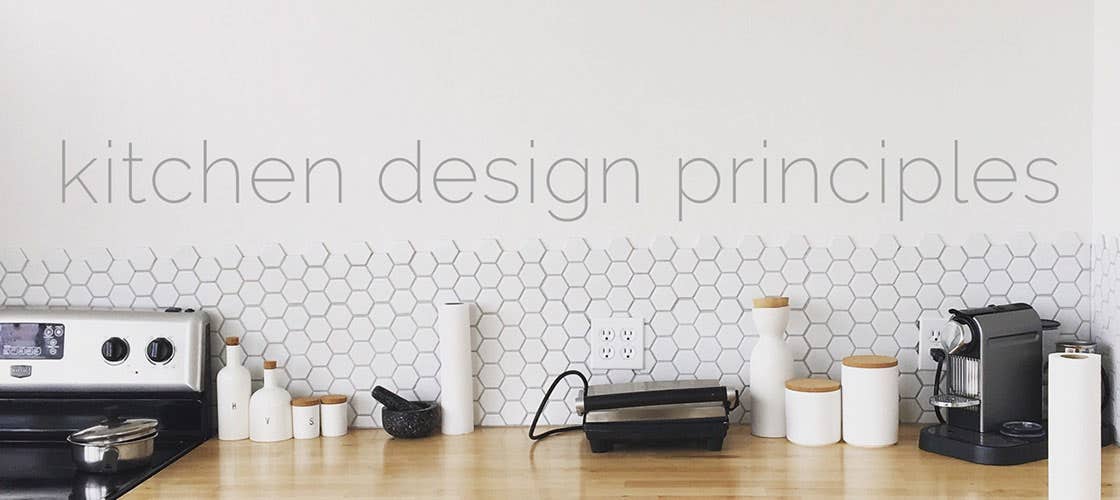
A basic understanding of kitchen design principles will help you make decisions about your space that are both artful and functional.
When planning a new kitchen, many different elements need to come together into a unified whole. Cabinets, appliances, backsplashes, countertops, flooring, and decorative pieces all have their own colors, textures, and forms. In short, they compose design elements. Design principles help you to guide the use of those elements.
With a solid understanding of design principles, you will be more prepared to put all the different pieces together in a way that’s beautiful and suitable to your space.
Here are the basic principles of interior design we will talk about in this article:
Have you ever walked into a room and had an immediate sense that something was “off”? Perhaps there’s too much empty space in one area, while an oversized TV and sofa dominate the rest. When a space doesn’t feel right, it might be because the visual balance is tilted in one direction, or the symmetry is off.
A well-balanced room communicates a sense of relaxation and security. When you enter a space that follows the kitchen design principle of balance, the whole room will feel centered and composed throughout.

There are three ways to create a balanced room, Asymmetrical, Symmetrical, and Radial. Start with the center point. As the point where your gaze lands, this is typically the literal center of a wall or room. Build symmetry around that focal point.
Take for example the image above. The chairs, kitchen cabinets, table, and décor are all symmetrical around the center point, upon which a vase of flowers is placed (this is a strong example of a focal point – more on that below).
All in all, symmetry helps create a sense of harmony and calm. However, your space doesn’t have to be a mirror-image of itself to have balance. Asymmetrical kitchens can still distribute design elements, so they have balance.
In an Asymmetrical kitchen design, like the photo below, you will often see one very tall side of the room. Typically, the pantry and refrigerator surround would look heavy on its own. But because the design used stacked wall cabinets on the right side, it created more visual weight giving the design symmetry and balance.

Radial balance on the other hand is circular symmetry that’s commonly created with furniture and lighting. Like most principles, radial balance starts with a focal point. As an example, let’s use a round dining room table.
The focal point (round table) will be surrounded by smaller rounded objects that decrease in size as the eye moves away from the table, or vice versa. This could include curved or rounded dining room chairs as your eye moves away, or a circular chandelier with rounded table décor at the center of the table as your eye moves inward. Special design features like radial balance grab attention and peak interest.
Emphasis is often translated as a focal point that draws your attention in a room. You might think about a fireplace, TV, a large piece of art, or a wildly colored piece of accent furniture.
Common kitchen focal points include the stovetop, backsplash, and hood, but your kitchen’s focal point may be a sink, center island, or a window. It’s important to use emphasis through focal points so the eye has somewhere to rest. When there is no focal point, the design can seemingly have no purpose.
Ideally, other objects in the room will support and not compete with the decided focal point, although larger spaces might benefit from having multiple focal points.
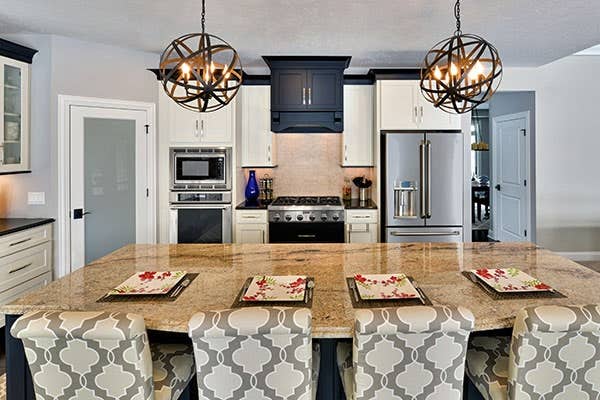
In this kitchen, the bold use of contrasting black and white paint makes the wood range hood really pop out.
Without a focal point, a kitchen might appear bland or uninteresting. Take for example the following remodel of a kitchen with standard builder-grade cabinets:
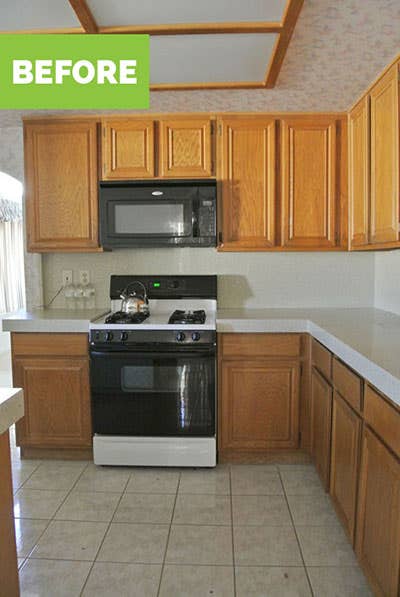
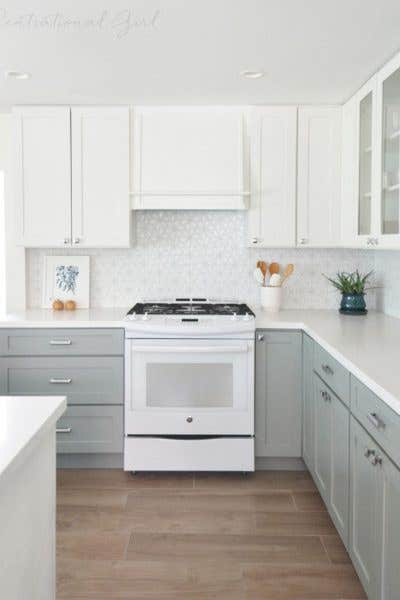
Hardly the most inspiring. The design for the newly remodeled kitchen mostly preserved the existing layout, but the difference was striking:


The new kitchen has focal points on both walls, with an elegant wood range hood and glass cabinet doors. Moreover, the eye is drawn to the warm wooden accents. By keeping tight control over the use of color with a neutral two-toned scheme of white and gray cabinets, the designer was also able to add interesting accents in color as well as form.
As a side note, these photos show why two-toned white and gray kitchens are a favorite among modern designers – they create big visual interest with minimal décor.
The kitchen design principles of scale and proportion ensure that elements in a room are properly sized in relation to one another. Any object should be scaled relative to its surroundings so it’s not too large or too small for a room.
Your dream kitchen might have a large, professional-grade cooktop and a massive kitchen island for entertaining guests. But does that 48” induction range really fit in your 12 x 12 space? Will your island seating squeeze your walkways to the point of discomfort? This is where proper sizing is important: ensuring that the elements in the space suit each other and suit the space as a whole.
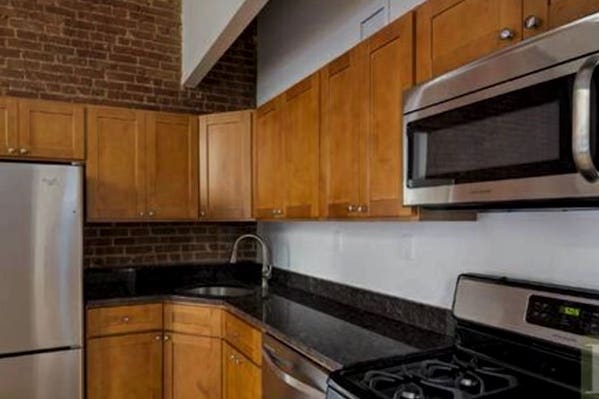
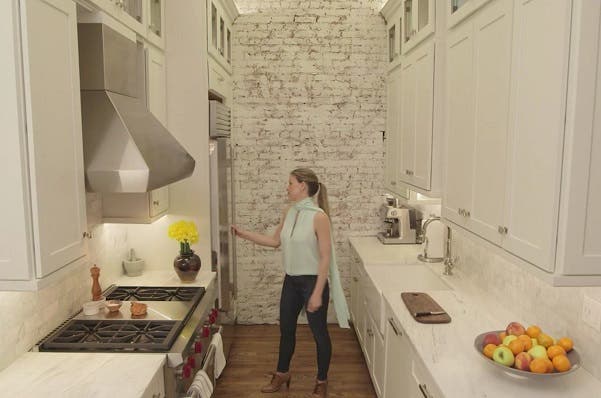
This was a narrow and cramped galley kitchen in New York City. Luckily, they had a high ceiling. The answer to creating more functional storage was to scale the height of the cabinets in proportion to the height of the room, which immediately made the space feel larger and more comfortable.
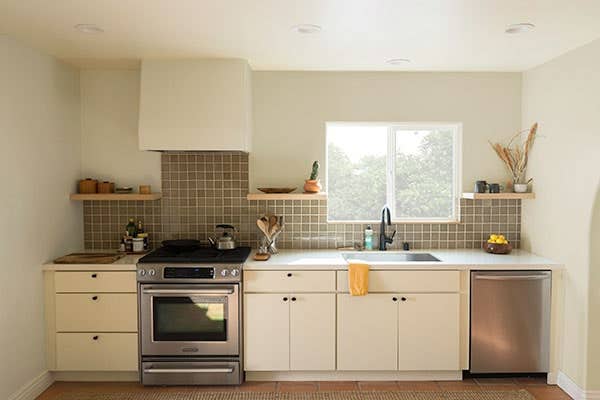
On this kitchen wall, notice how the width of every element is approximately equal size. The cabinets, shelves, appliances, hood, and windows are all scaled to fit each other simply and elegantly (including the decorations!). This lends a sense of peaceful orderliness to the space.

The wide, open concept design of this space allows for the large, customized L-shaped island with banquet seating. The island is not only super large to support preparation and entertaining space; the proportion of the island to the rest of the room allows it to function as a sort of divider that creates distinct zones for cooking, dining, and living in the space.
Unity, although not the most complex principle, is a very important one. The overall idea is to create harmony by designing areas that feel complete. For example, a kitchen with finishes and textures that complement each other or a large kitchen table with the right size décor and coordinating chairs create unity. As a whole, unity completes a space so there are no areas that feel blank, unfinished, or mismatched.
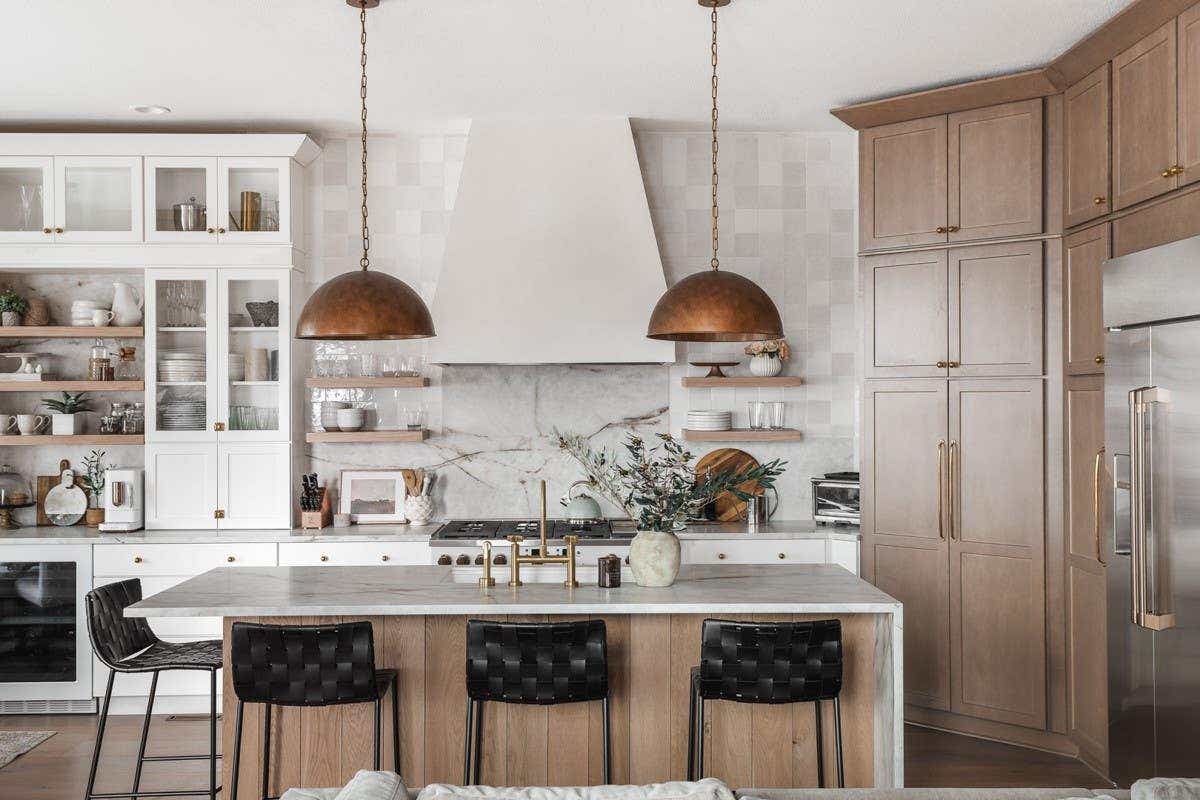
Any dream kitchen remodel or home upgrade needs the principle of rhythm to feel complete. This interior design principle can be used in a few different ways to achieve that complete feeling we all aim for when designing a space.

An easy way to use rhythm through progression is by color and scale. Draw your guests into your new kitchen design by using smaller decorative items, gradually making them larger as you walk towards the focal point of the room. The same goes for color; use neutral colors at an entrance with more pops of color as you walk towards the focal point, or use another color palette that fits your style.
Rhythm through repetition is also easy to use. Take a specific fabric, pattern, or wood finish and use it in multiple areas. Repeating the same materials creates a sense of completion making it easier to understand the space and its design. Just make sure you don’t overuse it. Two or three times throughout the room will provide a nice balance without looking overdone.
Every home design needs to have flow otherwise you will find each space looks choppy and disjointed. To create flow from room to room, use different types of lines and curves. This can be achieved through small furniture pieces like buffet cabinets or bookshelves, or through arched doors and artwork. Regardless of your choice, use these details to make smaller focal points that draw you into the next room and your design will transition smoothly.
Anyone who has watched HGTV knows that contrast is typically displayed through color. When kitchens or living rooms are too monotone or washed out, contrast adds depth and definition. However, there are multiple ways to introduce contrast into a room; through colors, materials, forms, and textures. By using these different methods, any room can go from basic to beautiful. Here are the details of each type of contrast and how to use them.
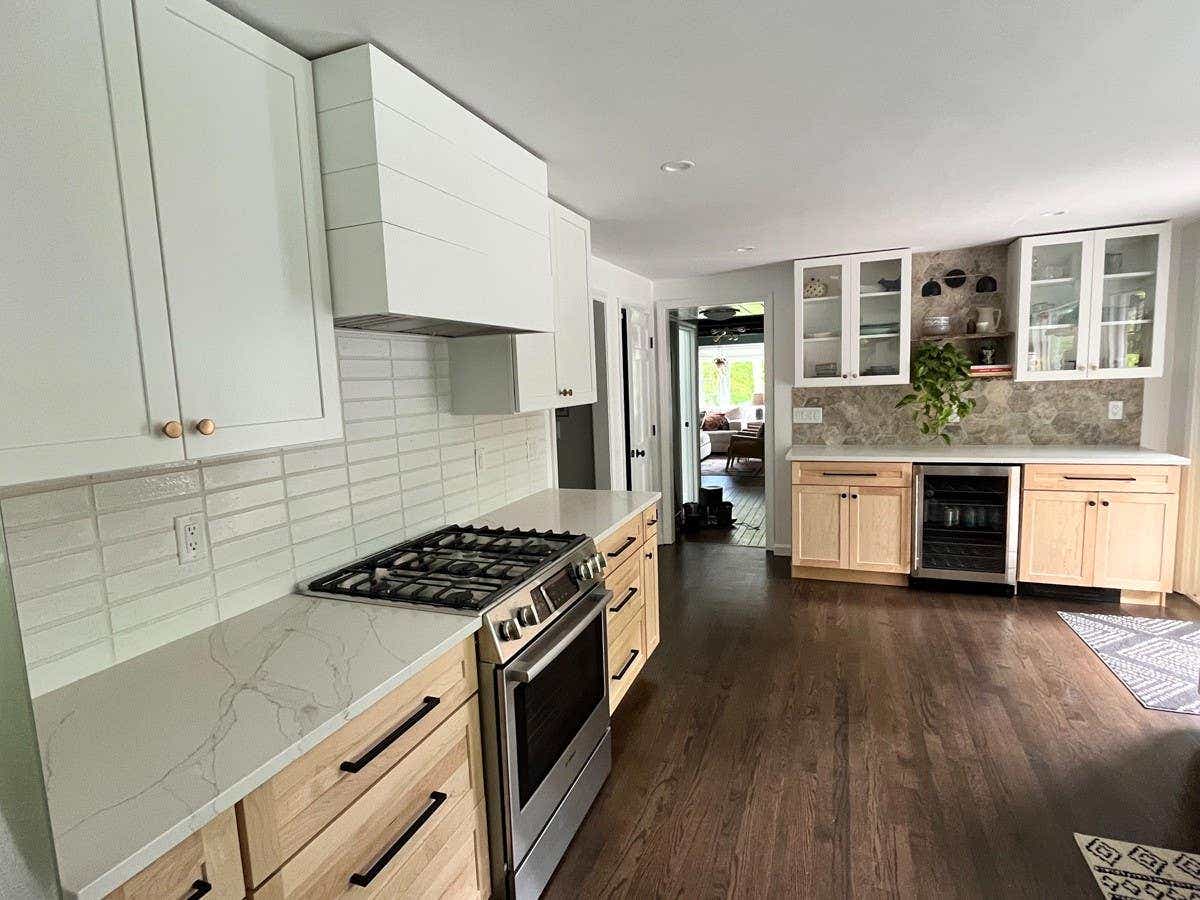
As the most common form of contrast, color is easiest. Color is used to create drama and draw the eye so using opposing colors in light and dark tones will create contrast. Living rooms with a neutral base can use brightly colored pillows or a large area rug for vibrance or use darker tones for a more muted, casual feel.
Make an empty box high-end by adding different materials to the mix. Any kitchen remodel, living room or bedroom can be drastically improved by adding varying materials like wood, glass, different metals, plastic and fabrics. Using these elements together will create a dynamic contrast and make your space look more natural.
Forms are simply different shapes. Squares, circles, rectangles, ovals and other shapes can be used together to soften a modern space, or add structure to rooms with too many smooth lines.
Rooms with no texture lack depth and character. Avoid this bland look and use multiple textures to add warmth to a kitchen or bedroom. This could include wicker baskets for storage with waffle knit hand towels, or velvet throw pillows with a decorative wool blanket. Whenever you have something smooth, add something textured, and vice versa.
Details matter because they pull the room together. Without details, most rooms would look like big open boxes. They add style, personality, and a custom touch that makes you feel welcome in your home. Details can include, but are not limited to the following elements:
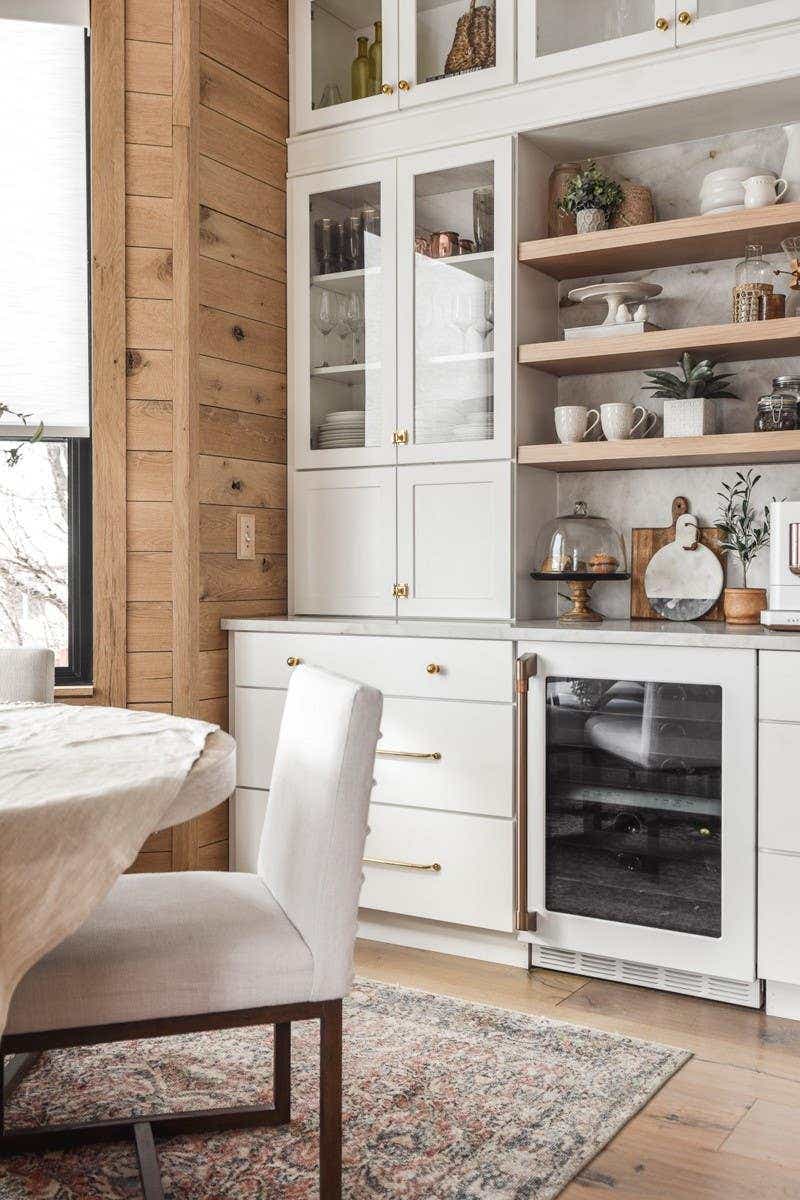
Combining these details with larger features like sofas, cabinets and countertops will emphasize your layout and color scheme. Additionally, they provide thoughtful ways to tie the design together or showcase something unique about the home or family. For example, a homeowner that loves trees can add leaf-patterned pillows and woodsy artwork to their living room for a harmonious balance.
Among all the principles and elements of kitchen design, there is one golden rule. When it comes to the layout of your kitchen design, use a kitchen work triangle. Some people think this idea is outdated and old, but efficiency and safety never go out of style.
A kitchen work triangle is made up of three areas; the sink, cooktop, and refrigerator. By connecting these three areas within a certain length, you can create a more efficient kitchen design. Each leg of the design needs to be a minimum of 4 feet and a maximum of feet with a total triangle length of no more than 27 feet.
Designing your space can feel intimidating – even overwhelming. There’s a whole world of detail and creative freedom available in designing a space (not to mention details in materials, building, and installation!). Remember that you don’t need to be a professional designer or an experienced DIYer to create a kitchen you love. Having a grasp of the basic vocabulary of design will help you work with a kitchen designer – it’s their job to make your vision come to life. Your voice matters, because your home should ultimately be designed to suit your unique wants and needs.
Resources to help you through your project.
Read More
The basic tools used for designing an interior space.
Read More
Most kitchens will fall into one of these five.
Read More
Take the first step toward your dream kitchen today! We’ll connect you with your personal designer to make your project a reality.
Let’s Get StartedThe six main kitchen layouts include L-shape, U-shape, G-shape, galley, one-wall and the kitchen island layout. L-shaped layouts are made of two adjoining walls that create an ‘L’ shaped design. U-shaped kitchens are similar, but have three adjoining walls giving the kitchen a ‘U’ shaped design. G-shaped layouts are three adjoining walls again with a peninsula that is often used for more workspace or seating. Galley kitchens are layouts have two parallel kitchen walls with entrances at both ends. One-wall kitchen designs have cabinetry on a single wall and are often found in smaller homes or ADU’s (accessory dwelling units). Lastly, kitchen island designs usually include one wall of kitchen cabinets or an L-shaped design with a center island for cooking or seating.
The kitchen work triangle rule is set in place to create efficient, functional and safe kitchens. Three focus areas are the sink, cooktop and refrigerator. Each of these areas is a leg of the triangle and should be within 4 to 9 feet long with the total kitchen triangle no longer than 27 feet. By using this golden rule, your kitchen remodel’s workspace will be much more focused leaving you with a higher functioning kitchen.
With the exception of the single wall kitchen all the other five shapes are very functional. Choosing the layout depends greatly on the kitchen area floor space and personal wants and needs.
Standard kitchen sizes in homes around 1500 square feet range from 160 – 175 square feet of kitchen space. In homes that are 4,000 square feet or larger, the average kitchen size is around 240 square feet.
Ten by ten kitchens are L-shaped kitchens calculated in linear feet. Each wall should include ten linear feet of cabinetry from outside edge to the inside corner. Together, a 10x10 kitchen will have 20 linear feet of cabinetry. These typically include standard 30-inch-tall wall cabinets, a 36-inch sink base, standard base cabinets, a 36-inch corner cabinet and basic moldings to complete the kitchen design.
Quantities of cabinets needed for each kitchen will vary based on the size of your home and room. First take inventory of your needs. Smaller kitchens will typically need 150 square feet of space. Medium-sized kitchens will usually need 151 - 350 square feet of space, and larger kitchens will fill 350 plus square feet. Within each of these spaces, you and your designer should determine how much cabinet space your kitchen design can accommodate.
The best way to design a kitchen is by starting with inspiration and a budget. Create a well-rounded wish list that covers all your needs and leaves out trouble areas you would like to eliminate. Once those are complete, identify your style and contact a CliqStudios designer for free design assistance. Most questions homeowners have about kitchen remodeling can be easily answered by a CliqStudios designer.
Single Wall, Galley, L-Shape, U-Shape, and G-Shape. Island is also considered a sixth "shape" but most of the typical shapes can incorporate an island depending on the square footage available.
The main principles of kitchen layouts or principles of interior design are used to create a balanced, dynamic, and comfortable space. There are 7 interior design principles that should be followed regardless of the space being remodeled. The principles include Unity, Balance, Rhythm, Scale & Proportion, Contrast, Details and Emphasis.
Function first. This is why incorporating the work triangle guidelines is very beneficial. All other aspects will relate to the available square footage and personal needs and wants.
There are actually 6 basic kitchen layouts; Single Wall, Galley, L-Shape, U-Shape, G-Shape and Island.
In kitchen design, functionality should be the first aspect tackled. In many cases, this is why a work triangle design is incorporated. Other design aspects will depend on the size of the space and the owner's wishes.
Kitchen design is influenced by design principles and design elements. The design principles include Unity, Balance, Rhythm, Scale & Proportion, Contrast, Details and Emphasis. Design elements are Color, Line and Texture. Each of these factors has an impact on the design and creates beautifully balanced and flowing kitchen designs.
A kitchen must be designed properly so that is functions efficiently for the client. This is why work triangles are often seen in kitchen designs, so the space can be maximized. Other details, such as cosmetic choices are left up to the client.
If you have never done a kitchen remodel before, you should avoid designing and installing the project on your own. CliqStudios designers offer free design assistance and have completed over 50,000 projects. During any type of remodel, use free resources provided by experts that can guide your project successfully. By doing this, you ensure that your project will be functional, efficient and safe.
In kitchen design there are 6 layouts that stand out from the rest. Those include: L-shape, G-shape, U-shape, single wall, galley, and island.
Other than the single wall kitchen, the other 5 kitchen layouts are incredibly functional. Ultimately, the layout chosen depends on how much space is available and the client's wishes.
Yes. The minimum size for a "good" size kitchen, that provides function, is 10'x15'. What can affect the size of a kitchen is entryways and windows. On average every kitchen has at least three entry points that can disrupt the design of the kitchen.
Begin with consulting a professional kitchen designer and concentrate on function first. This is why incorporating the work triangle guidelines is very beneficial. All other aspects will relate to the available square footage and personal needs and wants.
The three primary areas that need to be addressed in the kitchen is the cooktop, sink, and the refrigerator which encompass the work triangle. According to the guidance of the National Kitchen and Bath Association, each leg of the triangle should measure between 4 and 9 feet. This allows a cook to reach their cooking, cleaning, and food storage areas with ease, while providing enough space between them to avoid crowding.
