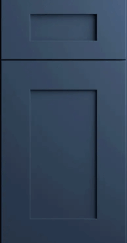

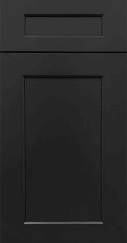

Know Your Cabinets
Find out about cabinet types, components, materials, and more.
Read More

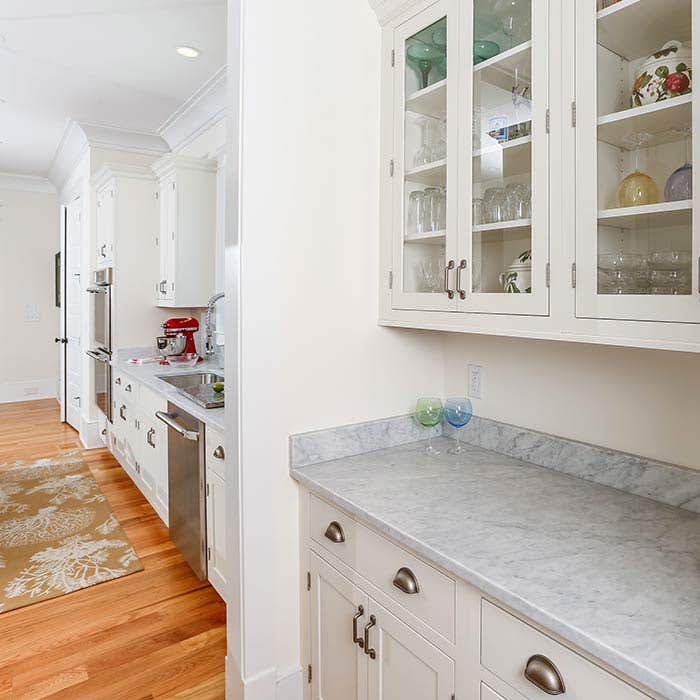
Cabinets form the backbone of the kitchen and may add value, function, and beauty to your home. In its simplest form, a cabinet is just a box on the wall, however, they are defined by their most common location.
There are three types of basic cabinets: wall, base and tall. Variations of these basic cabinets are used to store specific cookware, display art or dishware, and reinforce a style with custom cabinet design.
Cabinets can be combined to form another cabinet type. For example, stacked wall cabinets can form a tall utility or pantry cabinet that reaches from floor to ceiling. Combining base and wall cabinets for an island can create a unique layered design. A drawer base cabinet can also be stacked with a wall cabinet to configure a wall oven cabinet. Combinations of varying types of kitchen cabinets can be used to create an endless assortment of custom kitchens.
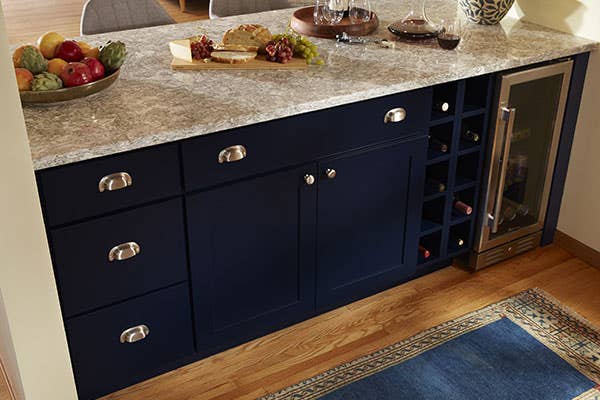
Base cabinets set the footprint for your floor plan and bear most of the everyday work. Base cabinets are mounted on the floor that support the countertops. Kitchen islands are created from multiple base cabinets and installed on site.
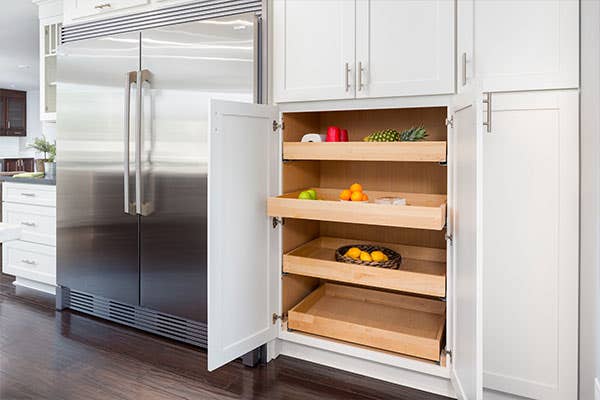
These cabinets can be customized in a few different ways, specifically when it comes to storage solutions. Roll-out trays, cutlery drawers, pots and pans pull-out organizers, pull-out spice racks, and waste basket roll-outs are just some of the options that you can include in your kitchen design to make it more functional and effective.
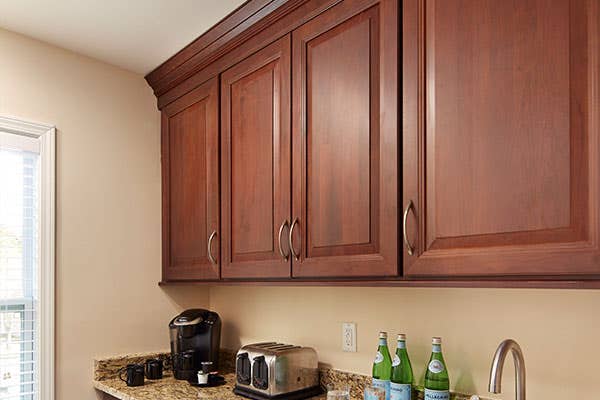
The obvious – wall cabinets are cabinets that mount to the wall. Wall cabinets are also called upper cabinets or “uppers.” These cabinets have the most design flexibility: varying three different heights, multiple widths, custom depth options and glass door options. Wall cabinets stacked as base and tall cabinets from floor to ceiling create an accent wall that can house everything from cookbooks to appliances. Wall cabinets can extend to the ceiling, making use of high spaces for storing infrequently used specialty serve ware and cookware.
A tall pantry or utility cabinet can extend from floor to ceiling. It provides as much as four cubic feet more storage than a wall and base cabinet in the same space. As a pantry it provides storage for everything from small appliances to canned goods. The tall utility cabinet can also be configured to accommodate built-in ovens and microwaves.
Just like base cabinets, utility cabinets can also be expertly organized to better serve you and your family. There are several pantry storage options available, including pull-out storage that can be used for storing spices, roll-out trays that can offer easy access to pantry items and dry goods, and lazy susans that make the most of tight spaces such as corner cabinets. They can also serve multiple functions, for example, tall utility cabinets offer a great amount of storage for a mudroom or laundry room.
Find out about cabinet types, components, materials, and more.
Read More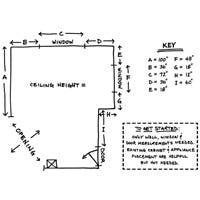
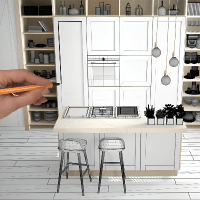
Sketch your measurements to start working with a kitchen designer.
Read More
Take the first step toward your dream kitchen today! We’ll connect you with your personal designer to make your project a reality.
Let’s Get StartedPartial overlay, full overlay, and concealed hinges are the most common types of cabinet door hinges. These all serve different functions based on the type of cabinet you have chosen. Partial overlay cabinets will typically have partial overlay cabinet hinges, and the same goes for full overlay. Concealed hinges are generally used for inset kitchen cabinets and European or frameless cabinets.
The four main types of cabinets are base, wall, tall, and utility cabinets. All these cabinet types or a combination of them are commonly used within kitchen designs. Base and wall cabinets are typically used for storing dishware, drinkware, as well as pots and pans. Tall cabinets are often used as pantry cabinets to store dry goods. Lastly, utility, or specialized, cabinets are used to maximize the available space in the kitchen. For example, corner cabinets and wine racks. A CliqStudios designer will work one-on-one with you to determine which types of cabinets you should incorporate into your kitchen design as well as create a layout that will best serve you and make the most of your space.
When designing a kitchen or bathroom there is a lot of room for customization. There are many cabinet accessories to choose from includingroll-out trays, pull-out spice cabinets, pots and pans storage, cutlery dividers, knife blocks, tall pantry cabinets, lazy susans, and sink base organizers. All these solutions can easily help maximize your storage space and provide a more functional remodel. For help organizing your kitchen design, contact a CliqStudios designer today!
To find out what type of kitchen cabinets are already installed in your home, you will need to explore and consider a few factors. The construction, interior storage options, and specialty cabinet sizes will assist you in this process. If you need help at any point, talk with a CliqStudios designer.
The three grades of cabinets include custom, semi-custom, and stock. Stock cabinets, which may include RTA cabinets, are pre-sized from the cabinet manufacturer and are standard in design. These cabinets have limited options for customization. Semi-custom cabinets have a larger selection than stock and they are often in the middle of the price range for kitchen cabinets. They are made-to-order, so they have many modification options to fit any space perfectly. Lastly, custom cabinets have the greatest selection of material, styles, and finishes made for each home. Custom cabinets are at the top of the price range because they create a completely unique design.
You can find the largest online selection of cabinets at CliqStudios. We offer RTA and custom cabinets with limitless finishes. Explore all kitchen cabinet styles, or start your free kitchen design to connect with a designer today.
The 3 main types of cabinets are RTA, semi-custom, and custom. RTA cabinets are the most affordable option. Custom and semi-custom cabinetry are modified and built to the specifications of every unique space.
The best type of cabinet depends on each project and wish list. If speed and affordability are top of mind, RTA cabinets may be best. If customization, storage and a wide range of designer finishes are most important, semi-custom or custom cabinets may be a better fit.
Cabinet style can be determined by two different things. When most people think of cabinet style, they think about a shaker-style door on the face of the cabinet. The other way cabinet style is defined is by the door overlay. For example, European cabinets are referred to as frameless cabinets meaning there is no face frame on the front while the door covers the entire opening. Likewise, inset cabinets are a style where the door sits inside the face frame.